Canaan has won a follow-on order from Tether for customized hardware, underscoring a shift in bitcoin mining toward modular systems and operator control.
Modular hardware moves deeper into mining
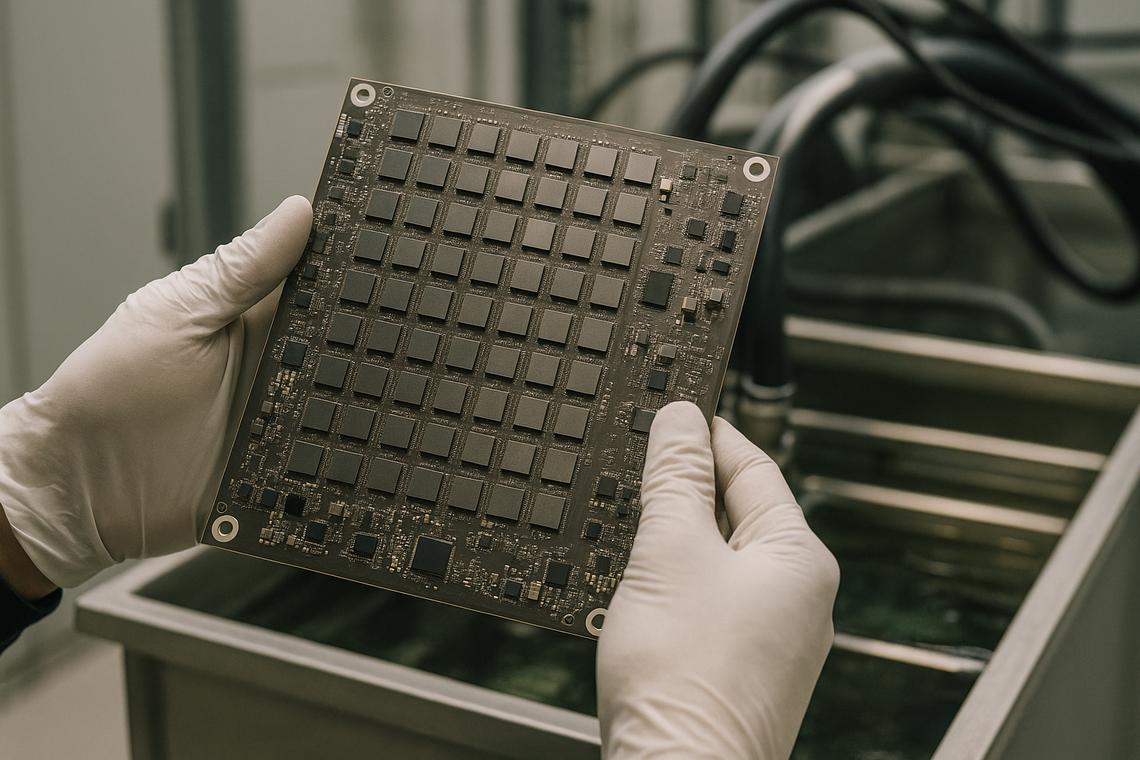
The Singapore-listed Avalon manufacturer said the order covers high-density hash board modules built for Tether’s immersion-cooled systems. The equipment will go to a Tether-affiliated site in South America. However, the purchase order did not disclose hashrate details.
The deal builds on a 2025 framework agreement. Under that plan, Canaan developed modular hardware components, while Tether built its own control boards and management software. Together, the two companies created an architecture that separates compute modules from traditional enclosures and power systems.
That approach marks a clear break from the industry’s usual plug-and-play rigs. Moreover, it reflects rising demand for customizable hardware that can fit operator-designed systems. Nangeng Zhang, Canaan’s chief executive, said the model should improve efficiency and thermal management in immersion-cooled environments.
Tether widens its infrastructure push
For Tether, the partnership signals a broader move beyond digital-asset liquidity and into mining infrastructure and software. Paolo Ardoino, Tether’s chief executive, said the company wants systems that can be tuned and upgraded at the component level. That gives operators more direct control over cost and performance.
Moreover, the hardware announcement came shortly after Tether introduced its open-source Mining Development Kit. The software stack is designed to standardize how mining operations are monitored and managed. By combining proprietary integrations with open tools, Tether is positioning itself as a full-stack provider for mining infrastructure software.
The agreement also gives Tether an option to expand purchases in future phases. If the architecture proves effective, the initial deployment could scale further. Immersion cooling systems remain central to that plan, since heat removal is a key constraint in high-density computing.
In practical terms, the latest bitcoin mining order shows how major industry players are moving toward flexible platforms rather than sealed machines. The next phase will depend on whether the South American deployment delivers the efficiency gains both companies expect.