
Crypto trading fees often look small on paper. Traders barely notice those small percentages. But over time, the cost adds up, and you’re already down with a hefty amount of charges to be paid.
There’s another downside. – there are several hidden fees until you’re in the field. Maker fee, taker fee, spreads, deposit fee, withdrawal fee, and whatnot. And these hidden fees directly impact your profits, whether you’re in for the short term or long.
Let’s break down exactly how Delta Exchange’s low fee structure and no hidden charges help you trade freely.
Why Low Crypto Trading Fees Matter?
Low trading fees matter because lower fees mean higher profit margins.
- Protecting small profits: Even a small fee can eat up a significant share of the profits.
- Fast adding up: Frequent trades could add up to a big chunk of trading costs.
- Provide flexibility in strategies: In the long term, lower fees make it easier to enter and exit positions without thinking much about the charges.
- Impact on derivatives trading: In F&O trading, margins are very tight, so even small fees can directly hit your profits.
- Helps in cost planning: Lower trading fees help in estimating the cost before placing a trade.
Delta Exchange’s Fee Structure
Delta’s fee structure is transparent, and it’s important to understand what you’re paying for. But first, some basics:
- What’s a maker fee?
A maker fee is when you place a crypto derivatives order that doesn’t get filled instantly. Instead, it sits in the books and adds liquidity. It happens when you place a limit or a stop-limit order.
- What’s a taker fee?
A taker fee is the charge paid by traders who trade options, with the fee being filled as quickly as possible. Such trading options can be market orders.
Futures trading fees
- Maker: 0.05%
- Taker: 0.02%
Options trading fees
- Maker: 0.010%
- Taker: 0.010%
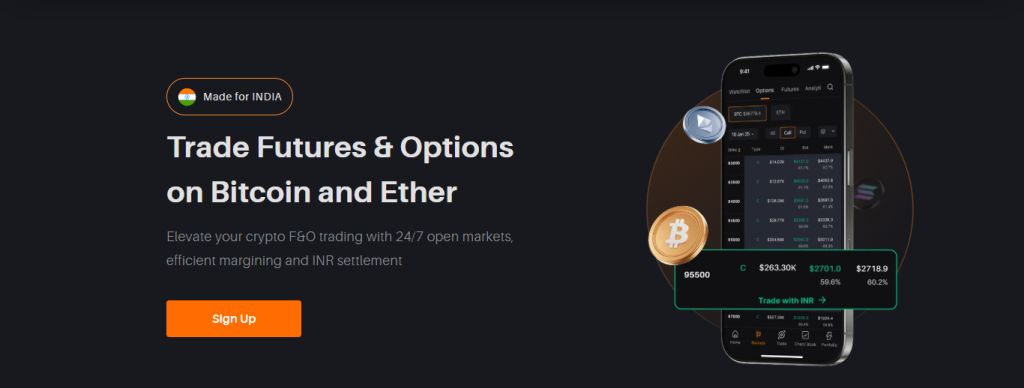
In addition to trading fees, there’s an 18% GST on them. To avoid adding cost, the option fee is capped at 3.5%.
Both deposit and withdrawal fees are zero in this crypto trading app.
What Are The Liquidation Fees?
A liquidation fee is a charge that applies when a leveraged position gets force-closed because the trader’s margin is no longer enough to keep it open.
Liquidation fees are transparent, like other charges in Delta.
Options:
- BTC:
- 20% of premium
- 0.05% of notional size
- ETH:
- 20% of premium
- 0.10% of notional size
Futures:
- BTC: 0.05%
- ETH: 0.10%
- Charges for other coins range from 0.1% to 1% based on leverage.
An 18% GST applies here too.
Extra Costs You Should Watch Out For
Even with low fees, trading can still involve a few extra rupees that traders should keep in mind. These are not always fees in that sense, but they can affect the outcome of a trade, especially in crypto derivatives.
- Network fees: Even with a low platform fee, network fees can change based on traffic.
- Funding fees: If a trader holds a position for a long time, costs can quietly add up. It mostly applies to perpetual futures.
- Slippage: Market orders can execute at a slightly lower price than expected, especially during volatile market conditions.
- Spread costs: The gap between the buying and selling prices can act like an indirect fee, especially on less liquid pairs.
Delta Exchange makes more sense for traders who place frequent orders or trade crypto derivatives, where even small fees add up. For advanced users, Delta also offers API access for automated trading.
How to Get Started on Delta Exchange?
Signing up for Delta is pretty easy. All you need to do is
- Visit their website – https://www.delta.exchange/
- Create an account using any one of your choices, it could be email, Google, or your Apple ID.
- Complete the KYC verification using PAN, Aadhaar, and a selfie.
- Link a bank account.
- Make a deposit because Delta doesn’t charge you for making one.
Final Take
Fees could look small, but the cost could add up in a blink. And this is where Delta Exchange stands out. From a low and clean fee structure to its focus on F&Os. To make people aware of the various other charges and why low fees matter in trading.
Overall, Delta Exchange is one of the top Indian crypto exchanges and can be a strong option for users of all kinds, especially those who are looking to diversify or trying to learn the basics.
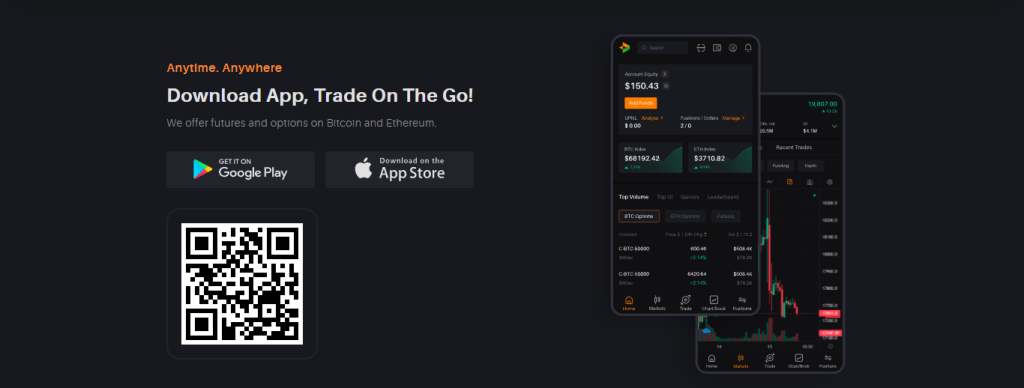
To start trading crypto derivatives, visit Delta Exchange’s official website. You can also follow Delta on Xfor the latest updates.
Disclaimer: Cryptocurrency markets are highly volatile and involve risk. Please do your own research before investing.